

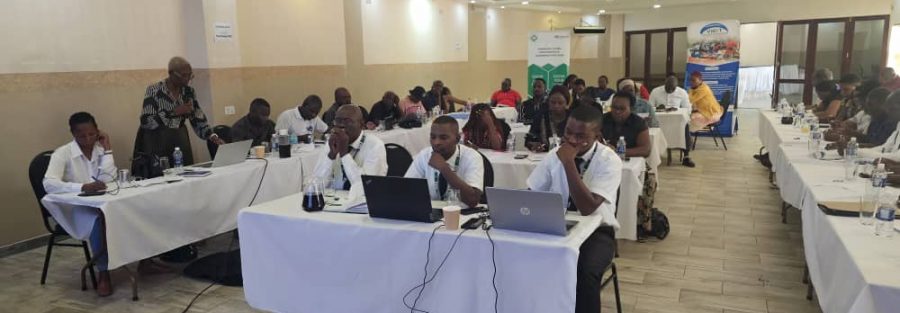
The Vendors Initiative for Social and Economic Transformation (VISET), in collaboration with the Gweru Residents and Ratepayers Association (GRRA), convened an Open Policy Discourse in Gweru to interrogate informal economy taxation and Public Finance Management (PFM) in relation to health service delivery. The dialogue brought together informal traders, residents, persons with disabilities, Gweru city council (Revenue department, Finance Committee chair and councillors, central government institutions (Assistant District Development Office, Ministry of Women Affairs District head, Ministry of youth, Office of the President and Cabinets, Zimbabwe Revenue Authority), and CSOs and CBOs to foster shared understanding on taxation, compliance, healthy service delivery, and inclusive development. The engagement sought to strengthen accountability, improve taxpayer education, and ensure that public revenues translate into tangible social services, particularly in the health sector.
The discourse was anchored by a presentation on the National Budget and health financing delivered by Dr V. Makanza, which provided a sobering assessment of Zimbabwe’s health sector. Once regarded as a regional model in the 1980s, the sector has experienced a prolonged decline driven by macro-economic instability, underfunding, corruption, climatic shocks, the COVID-19 pandemic, and persistent brain drain. Dr Makanza highlighted that the 2026 National Budget allocation of ZiG 30.4 billion is primarily aimed at stabilising the health delivery system and modernising infrastructure, with funding directed towards hospital rehabilitation, medical equipment upgrades, and the expansion of ambulance services. She also noted that limited access to quality healthcare remains a major concern, particularly due to shortages of drugs, equipment, and skilled personnel in public facilities, despite increased allocations.
The presentation further underscored structural challenges within health financing, including delayed disbursements and over-reliance on external donor support, estimated at US$280 million. While donor funding remains critical, the dialogue raised sustainability concerns and emphasised the need for domestically driven financing solutions. Proposed alternatives included the forthcoming National Health Insurance Scheme scheduled for launch in June 2026, the ring-fencing of sin taxes, utilisation of mining royalties, debt-for-health swaps, and innovative instruments such as Health Bonds and social bonds aimed at financing priority health outcomes. She also highlighted concern about the increasing commercialisation of specialised health services through Public-Private Partnerships, which risks deepening inequities by limiting access to those who can afford to pay.
The first presentation by the Zimbabwe Revenue Authority (ZIMRA) set the tone for the dialogue by focusing on taxpayer education and compliance within the informal economy. ZIMRA officials outlined the importance of voluntary compliance and demystified tax obligations applicable to informal traders. Participants were taken through step-by-step registration procedures using the TARMS system, with emphasis placed on simplifying compliance and improving accessibility. ZIMRA highlighted the benefits of compliance, including access to tax credits, formal recognition, and potential pathways to financial inclusion, while also explaining the consequences of non-compliance. The authority further briefed stakeholders on newly introduced taxes, including withholding taxes on betting, fast foods, and plastic bag manufacturing, stressing the need for early engagement and awareness to avoid punitive enforcement measures.
The Ministry of Women Affairs, Community, Small and Medium Enterprises Development, represented by the District Head, Mr Tauya Moyo presented on the importance of formalisation of informal enterprises. The Ministry emphasised that formalisation should not be viewed solely as a taxation mechanism, but as a gateway to sustainability, growth, and resilience. Formalised enterprises are better positioned to access training, financing, markets, and government support programmes. The presentation strongly argued for a balanced approach, where tax collection is accompanied by deliberate measures to support informal traders to grow their businesses. Participants were urged to consider graduated and supportive taxation models that allow enterprises to transition sustainably into the formal economy.
The Assistant District Development Coordinator (DDC) for Gweru Ms Chimanyiwa highlighted the role of the Office of the DDC and the role of civil society organizations towads NDS2 and coordinating development planning and policy implementation at district level. The presentation underscored the importance of aligning local development priorities with national policies and ensuring effective coordination across sectors such as health, infrastructure, and economic development. Emphasis was placed on community participation, monitoring and evaluation, and capacity building as key pillars for improving public service delivery and accountability. The Assistant DDC reiterated the need for collaborative approaches involving local authorities, central government, civil society, and communities to strengthen economic development outcomes.
Additional insights were provided by the Gweru City Council Revenue Head, Mr Moses Moyo who shared updates on municipal budgeting and health service priorities. Council indicated that it was awaiting approval of the 2026 budget, expected within the coming week. Proposed health-related priorities include the opening of Mkoba 1 Clinic and North Clinic, the establishment of a laboratory to improve diagnostic capacity, renovations at Senga Clinic, and the initiation of a new dump site, acknowledged as a capital-intensive but critical public health investment. These priorities were welcomed by participants, who stressed the importance of timely budget approval and disbursement to ensure effective implementation.
Reflections from discussants enriched the dialogue by grounding policy discussions in lived experiences. Speaking on behalf of residents, Fadzai Kanyai emphasised the need for deeper and more consistent engagement between ZIMRA and residents to improve understanding of how the tax authority operates. She noted that while council had submitted the 2025 budget for approval, residents hoped that the final budget would remain people-centred and fully reflect inputs provided during public budget consultations.
Representing persons with disabilities, Audrey Resike raised critical equity concerns within the taxation system. She questioned why persons with disabilities are subjected to a 15 percent tax while civil servants are exempted, despite persons with disabilities being among the most vulnerable groups. She called for a review and possible removal of the 15 percent tax burden. Audrey further highlighted challenges related to vehicle importation policies, noting that persons with disabilities are required to purchase vehicles with hand controls, which are costly, especially under the 10-year age restriction. She proposed allowing the importation of standard vehicles and installation of hand controls locally. She also raised concerns about poor road infrastructure, which accelerates wear and tear on assistive devices, despite persons with disabilities contributing through taxes. Additionally, she called for the TARMS system to be disability-friendly, catering for visual and hearing impairments, and urged inclusion of people with invisible disabilities in tax credit schemes. Property taxation was also challenged, given the high cost of living faced by persons with disabilities.
Reflections from informal traders echoed concerns about the cumulative burden of taxes and levies. Traders called for measures that alleviate pressure on already overstretched livelihoods, including flexible payment plans instead of penalties and prosecutions. There was strong support for the establishment of one-stop shops for business registration, licensing, and taxation to reduce compliance costs. Participants also called for improved national and local health budgets that align with the 15 percent Abuja Declaration target, exploration of innovative financing mechanisms such as social bonds, and the introduction of results-based incentives linked to measurable health outcomes. Enhancing equity and reducing disparities in healthcare access were identified as critical priorities.
Overall, the Gweru Open Policy Discourse reaffirmed the need for inclusive, transparent, and development-oriented approaches to informal economy taxation and public finance management. Participants agreed that taxation must be linked to visible improvements in public services, particularly healthcare, and that vulnerable groups must be protected through equitable and responsive policy design. The dialogue strengthened commitments to continued engagement between authorities, communities, and civil society to ensure that public resources are mobilised and utilised in ways that advance social justice and sustainable development.


