

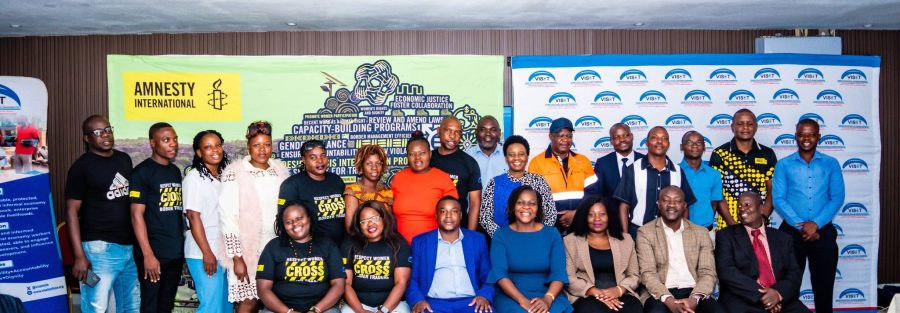
The Vendors Initiative for Social and Economic Transformation (VISET), in partnership with Amnesty International Zimbabwe (AIZ), convened a National Cross-Border Stakeholder Policy Dialogue on 12 November 2026 in Masvingo, bringing together women cross-border traders, government ministries, regulatory institutions, local authorities and human rights actors.
The dialogue provided an important platform for women cross-border traders to share their lived experiences, present evidence on the challenges they encounter and engage directly with institutions responsible for shaping policies that affect their livelihoods.
Held under the policy spotlight theme, “Formalisation Strategy of the Informal Economy: Progress, Alignment, and Opportunities for Women Cross-Border Traders,” the dialogue sought to strengthen stakeholder engagement and identify practical interventions towards an inclusive and enabling environment for women in cross-border trade.
The programme was directed by VISET Executive Director, Samuel Wadzai, who also moderated the panel discussion on Responding to Evidence. The panel brought together representatives from ZIMRA, NSSA, the Department of Immigration, Min of Public Service Labour and Social Welfare, Ministry of Women Affairs Community and SMEs Development and other relevant government ministries and Departments to respond to concerns and recommendations raised by traders.
VISET was particularly honoured by the presence of His Worship, the Mayor of Masvingo, Cllr Aleck Tabe , whose attendance demonstrated the importance of local authority leadership and collaboration in promoting inclusive economic development.
Discussions also explored opportunities for SME growth, women’s economic empowerment, gender-responsive policies and the role of institutions in creating an enabling environment for cross-border traders.
A central message emerging from the dialogue was that formalisation must be a pathway to economic empowerment, dignity and opportunity rather than an additional burden on informal economy workers.
For women cross-border traders, formalisation must translate into tangible benefits, including:
- Improved access to finance and markets.
- Simplified regulatory and border procedures.
- Access to social protection and information.
- Protection of human and labour rights.
- Meaningful participation in policy development and implementation.
The dialogue concluded with an action-planning session aimed at identifying concrete interventions, responsible institutions and timelines for addressing the issues raised.
VISET acknowledges Amnesty International Zimbabwe for this important partnership, the Mayor of Masvingo, participating government institutions, local authorities and all stakeholders who contributed to the discussions. Above all, we commend the women cross-border traders for bringing their voices, experiences and evidence to the policy table.
VISET remains committed to advancing the rights, representation and economic inclusion of informal economy workers.
We believe that sustainable formalisation can only be achieved when the people at the centre of the informal economy are meaningfully involved in shaping the policies that affect them.

