Dates: 05–06 August 2026
Venue: Zimbabwe International Trade Fair (ZITF), Bulawayo, Zimbabwe
Theme: “Building Better Jobs: Advancing Employment, Green Jobs, and Skills Development under NDS2.”
1. Executive Summary
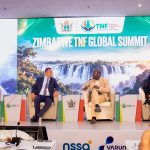
The Vendors Initiative for Social and Economic Transformation (VISET) participated in the Zimbabwe Labour and Employment Summit 2026, held from 05–06 August 2026 at the Zimbabwe International Trade Fair (ZITF) in Bulawayo. The Summit, co-hosted by the Ministry of Public Service, Labour and Social Welfare (MPSLSW) and the Tripartite Negotiating Forum (TNF), provided an important national platform for dialogue on employment, decent work, skills development, social protection, enterprise development, labour market transformation and the future of Zimbabwe’s economy.
For VISET, participation was strategically important because the Summit created an opportunity to bring the perspectives, priorities and lived realities of informal economy workers into a national policy space traditionally dominated by formal employment and established economic actors. VISET participated particularly in Theme 7: Formalisation, SME Empowerment and Entrepreneurship, contributing to discussions on the implementation of the National Formalisation Strategy, simplified taxation, incentives for formalisation, access to development finance and the creation of an enabling environment for informal enterprises to transition into more productive, resilient and sustainable businesses.
Beyond the formal programme, the Summit provided VISET with opportunities to strengthen relationships with government, organised labour, business membership organisations, development actors, skills development institutions and representatives of the informal economy. The Summit reinforced VISET’s strategic position that formalisation must not simply be about registration, taxation or regulatory compliance. It must be a process of inclusion, participation, protection, empowerment and economic transformation.
2. Why the Summit Was Important for VISET
Zimbabwe’s informal economy constitutes a significant component of the country’s employment and livelihood ecosystem. Millions of people depend directly or indirectly on informal enterprises, vending, small-scale trading, transport, services, agriculture and other forms of informal economic activity. Yet informal economy workers often operate at the intersection of multiple policy systems—labour, taxation, local government, finance, social protection, skills development, health, infrastructure and enterprise development. The Labour and Employment Summit therefore presented an important opportunity for VISET to advocate for a whole-of-government and whole-of-society approach to informal economy governance.
VISET used its participation to advance the principle that:
‘The informal economy should not be governed as a problem to be eliminated, but as an economic constituency to be recognised, organised, supported and progressively integrated into inclusive national development’
3. Expanding Social Dialogue and Participatory Governance
One of the most important outcomes of VISET’s participation was the opportunity to contribute to the broader conversation on expanding Zimbabwe’s social dialogue architecture. Traditional social dialogue has largely centred on government, organised labour and business. While this tripartite architecture remains important, the changing structure of Zimbabwe’s labour market requires the dialogue space to evolve. The growth and diversity of informal employment means that informal economy workers must increasingly become recognised participants in policy conversations affecting their livelihoods.
VISET therefore advocated for the expansion of social dialogue platforms to include:
- Informal economy workers and their representative organisations;
- Small and micro enterprises;
- Women and youth in the informal economy;
- Local authorities;
- Community-based economic organisations;
- Cooperatives and producer organisations;
- Civil society organisations;
- Skills development institutions; and
- Financial institutions and private-sector actors.
This approach is important because policies developed without the participation of affected communities risk creating compliance burdens rather than sustainable solutions. For VISET, meaningful participation is not consultation after decisions have already been made. It means creating mechanisms through which informal economy workers can influence policy design, implementation, monitoring and evaluation.
4. Advancing the National Formalisation Strategy
VISET’s participation in Theme 7 provided a direct opportunity to contribute to national discussions around the implementation of Zimbabwe’s National Formalisation Strategy. VISET emphasised that successful formalisation should be understood as a progressive pathway rather than a single administrative event.
5. Public Finance Management and Inclusive Economic Governance
The Summit also provided an important platform for VISET to connect informal economy issues with Public Finance Management (PFM). Informal economy workers interact with public finance systems in numerous ways. They contribute to local and national economies through taxes, licences, levies, permits, consumption and employment, while simultaneously depending on public investment in markets, roads, water, sanitation, health, transport and social services.
6. Social Protection for Informal Economy Workers
Social protection emerged as an important cross-cutting issue for VISET. The majority of informal economy workers operate without the employment protections traditionally associated with formal employment. Many lack adequate access to pensions, unemployment protection, occupational safety mechanisms, maternity protection and other forms of social security. This creates significant vulnerabilities, particularly for women, young people, persons with disabilities and workers operating in precarious economic environments. VISET will continue advocating for portable, affordable and inclusive social protection mechanisms that recognise the realities of informal work. The organisation will engage relevant government institutions, social protection agencies, financial institutions, private insurers and informal economy associations to explore mechanisms through which informal workers can progressively access:
- Social insurance;
- Pension and retirement products;
- Health protection;
- Maternity and family-related support;
- Funeral and risk protection;
- Emergency livelihood support; and
- Other appropriate social protection instruments.
The Summit reinforced VISET’s view that decent work cannot be achieved without social protection, and social protection cannot be achieved if informal workers remain outside the policy architecture.
7. Skills Development and Human Capital
Skills development was another critical area of engagement. Zimbabwe’s informal economy contains considerable entrepreneurial energy, but many enterprises face challenges related to business management, financial literacy, digital skills, marketing, bookkeeping, taxation, occupational safety and enterprise development.
8. Contribution to Inclusive Governance of the Informal Economy
VISET’s participation in the Zimbabwe Labour and Employment Summit is ultimately part of a broader organisational strategy to promote inclusive governance of the informal economy. Inclusive governance means that informal economy workers are not simply recipients of government programmes or subjects of regulation. They are recognised as economic actors, taxpayers, employers, workers, entrepreneurs and citizens with legitimate interests in national development. VISET therefore seeks to contribute to a governance model founded on:
Recognition → Representation → Participation → Accountability → Protection → Empowerment → Sustainable Economic Inclusion.
The organisation believes that when informal workers are recognised, meaningfully represented and included in decision-making, they are better positioned to participate in formalisation, contribute to economic growth and build sustainable livelihoods.
9. Conclusion
The Zimbabwe Labour and Employment Summit 2026 provided VISET with an important platform to elevate the concerns and aspirations of informal economy workers within the national employment and economic policy discourse. VISET’s engagement demonstrated that the future of Zimbabwe’s labour market cannot be discussed without addressing the informal economy. The Summit also reinforced the importance of building bridges between government, organised labour, private business, informal economy organisations, civil society and development partners.
For VISET, the next phase is about converting dialogue into action.
The organisation will build on the relationships, commitments and policy discussions generated through the Summit to strengthen social dialogue, advance the National Formalisation Strategy, promote accountable public finance, expand social protection, facilitate private-sector partnerships, strengthen skills development and create opportunities for informal enterprises to participate in the green and digital economies. Ultimately, VISET’s vision is of an informal economy that is recognised rather than marginalised, organised rather than fragmented, protected rather than vulnerable, productive rather than constrained, and represented rather than spoken for. This is central to VISET’s commitment to building an economy in which no worker is invisible and no enterprise is left behind.
VISET’s Strategic Commitment
“Inclusive governance of the informal economy requires more than bringing informal enterprises into the formal economy. It requires bringing informal economy workers into the institutions, decisions and opportunities that shape the economy Itself.”
VISET remains committed to working with Government, organised labour, business, development partners, civil society, local authorities and informal economy organisations to transform this principle into practical action.